
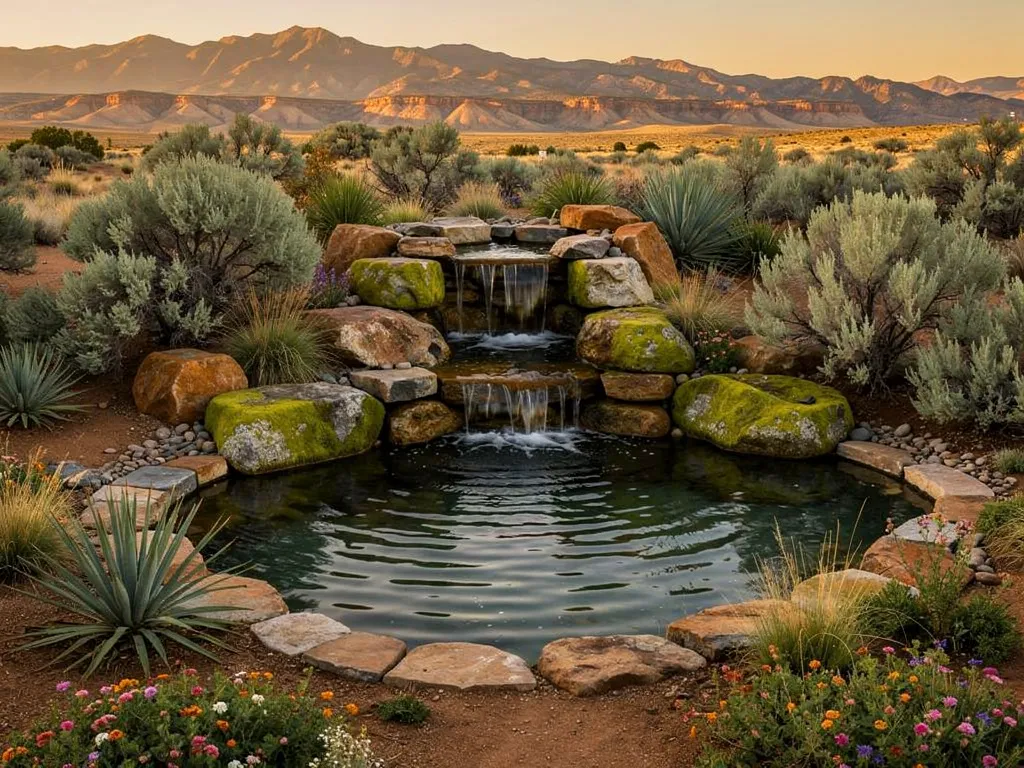
The best backyard waterfalls for New Mexico homes combine natural stone, recirculating water systems, and designs that complement the high-desert landscape. Options range from compact pondless waterfalls beside a patio to natural streams, multi-tiered cascades, and waterfalls flowing into koi or ecosystem ponds. The right design depends on your available space, desired sound, maintenance preferences, landscape style, and how you want to experience the water from your home and outdoor living areas.
This guide explores different backyard waterfall ideas for Albuquerque, Santa Fe, and other New Mexico landscapes, along with practical considerations such as placement, water use, maintenance, materials, and installation.
Key Takeaways
- Waterfall installations add motion, create natural focal points, and transform outdoor spaces into intentional living environments.
- High-end water features blend natural stone and robust metals with ecological considerations for lasting visual impact.
- Cascading water features provide soothing sounds while attracting native wildlife to Albuquerque Metro properties.
Why choose a backyard waterfall in New Mexico?
Moving water represents the ultimate luxury in an arid climate like New Mexico. A backyard waterfall creates a dynamic focal point in any garden, adding both visual drama and a profound sense of tranquility that counters the harsh desert environment.
How does a waterfall improve outdoor living in New Mexico?
A waterfall does more than add beauty to your landscape. The sound of water flowing over natural stone creates a calming atmosphere that can make your backyard feel more peaceful and inviting. It also helps soften traffic, wind, and neighborhood noise, making patios and courtyards feel more private. In smaller outdoor spaces, moving water can add depth and create a natural focal point that draws people toward seating areas and encourages them to stay and enjoy the space.
What makes a waterfall a smart investment for desert landscapes?
A well-designed waterfall delivers multiple returns:
- Creates a distinctive landscape focal point that can enhance the appeal and enjoyment of the property.
- Provides soothing soundscapes that mask unwanted noise from neighbors or roads
- Attracts native wildlife like birds and butterflies, supporting local ecosystems
- Adds cooling humidity to the immediate microclimate, making outdoor spaces more comfortable during summer months
Each waterfall we design becomes a living, breathing element that changes with the light and seasons. The result is an outdoor environment that feels intentional, restorative, and uniquely suited to New Mexico’s dramatic landscape.
What makes a waterfall design unique for New Mexico homes?
Waterfalls in New Mexico should feel like they belong in the landscape, not like they were added as an afterthought. The high desert setting, natural stone, native plants, and dramatic terrain all influence how a water feature should look and function. Our team combines artistic design with specialized water feature engineering to create waterfalls that complement the property and feel natural to the surrounding environment.
The goal is to work with the land rather than against it. Whether the project is a peaceful pond, a gentle stream, or a dramatic backyard waterfall, every feature is designed around the character of the property and the way water would naturally move through the space.
How does natural rock integration change the look?
Natural rock placement is one of the most important parts of creating a convincing backyard waterfall. The right stone, positioned correctly, helps control the direction, sound, and movement of the water while making the finished feature feel like part of the landscape.
We carefully select durable materials that can handle New Mexico’s climate while still providing a refined, natural appearance. Instead of creating a waterfall that looks artificial or overly constructed, we use stone, boulders, and surrounding landscape elements to create transitions that feel organic. The result is a custom waterfall that looks as though it has always been part of the property.
What materials hold up in this climate?
Water features in New Mexico need materials that can handle intense sun, dry conditions, temperature swings, and winter freeze-thaw cycles. Choosing the right materials helps a waterfall maintain both its appearance and performance over time.
Common options include:
- Natural stone that can withstand seasonal temperature changes and repeated freeze-thaw cycles
- Durable materials for spillways, accents, and structural details exposed to strong UV radiation
- Weather-resistant ceramics and finishes designed to hold their color and surface integrity in New Mexico’s intense sunlight
Material choice also affects how natural the finished feature feels. Stone, metal, and other landscape materials should complement the surrounding architecture and terrain rather than compete with it.
A well-designed waterfall can become more than a decorative feature. The result should be a living, breathing element that feels as natural as the Rio Grande flowing through the valley.
What Types of Backyard Waterfalls Work Well in New Mexico?
Pondless Waterfalls
Water flows into a hidden underground reservoir. Good for patios, smaller yards, front yards, and homeowners who want moving water without an open pond.
Natural Rock Cascades
Multiple elevations and carefully positioned boulders create the appearance of a natural mountain waterfall.
Waterfalls With Streams
A waterfall transitions into a winding stream before reaching a pond or hidden reservoir. Excellent for larger landscapes.
Koi Pond Waterfalls
The waterfall becomes part of the pond ecosystem while adding circulation, sound, and movement.
Ecosystem Pond Waterfalls
A more naturalized design combining aquatic plants, stone, wildlife habitat, and moving water.
Small Garden Waterfalls
Compact vertical waterfalls designed around patios, courtyards, and tighter landscape beds.
Large Estate Waterfalls
Larger multi-level features incorporating substantial boulders, multiple cascades, streams, landscape lighting, and ponds.
| Waterfall Type | Best For | Pond Required? | Relative Maintenance | Visual Impact |
|---|
| Pondless waterfall | Patios and smaller yards | No | Lower | High |
| Natural rock cascade | Natural landscapes | Optional | Moderate | High |
| Stream and waterfall | Larger properties | Optional | Moderate | Very High |
| Koi pond waterfall | Fish ponds | Yes | Higher | Very High |
| Small garden waterfall | Courtyards and tight spaces | No | Lower | Moderate |
| Estate waterfall | Luxury properties | Optional | Varies | Very High |
Pondless Waterfall vs. Pond Waterfall: Which Is Better?
Choose a pondless waterfall if you primarily want:
- Water sound
- Lower maintenance
- Compact size
- No exposed pond
- A feature near a patio
Choose a waterfall with a pond if you want:
- Koi or fish
- Aquatic plants
- A complete ecosystem
- More wildlife activity
- A larger visual centerpiece
How do small backyard waterfalls work in tight spaces?
Small backyard waterfalls can create a surprisingly strong visual and sensory impact without taking over the entire yard. The key is using height, water movement, and thoughtful placement instead of relying on a large footprint.
A compact waterfall can fit into a corner of a patio, along a garden wall, beside a seating area, or within an existing landscape bed. By stacking natural stone vertically and controlling the direction of the water, even a small feature can create the look and sound of a much larger landscape element.
For many smaller properties, a pondless or disappearing waterfall is one of the most practical options.
What makes a disappearing waterfall ideal for small New Mexico yards?
A disappearing waterfall uses a hidden underground reservoir instead of an exposed pond. Water flows down the waterfall, passes through decorative rock or gravel, collects in the concealed basin, and is pumped back to the top.
Because there is no visible pond, the feature requires much less space and can be integrated into areas where a traditional pond would not be practical.
This type of waterfall can work especially well in Albuquerque, Santa Fe, and other New Mexico communities where outdoor space may be limited. It creates movement, sound, and visual interest without making the landscape feel crowded.
Can a modest cascade really change a patio’s atmosphere?
Yes. Even a modest amount of moving water can completely change how an outdoor area feels.
The sound of flowing water can soften traffic, nearby conversations, and other neighborhood noise. Visually, the movement of the water gives the landscape more depth and helps draw attention toward a patio or seating area.
Plants can also be incorporated around the stonework to soften the edges and connect the waterfall to the surrounding landscape. Native plants, ornamental grasses, and drought-tolerant landscaping can make the feature feel like a natural part of the yard rather than a separate addition.
For smaller New Mexico landscapes, some of the biggest advantages include:
- Compact footprint: A pondless design provides the look and sound of a waterfall without requiring a large pond.
- Vertical design: Stacked stone creates height and visual interest while using relatively little ground space.
- Recirculating water: Water is reused continuously through the system instead of constantly requiring fresh water.
- Landscape integration: Stone, gravel, and plants can help the waterfall blend naturally into xeriscaping and desert gardens.
- Flexible placement: Small waterfalls can fit beside patios, walkways, walls, garden beds, and other areas that might otherwise go unused.
What features should a New Mexico waterfall include?
A waterfall in New Mexico needs to be designed around more than appearance. The region’s dry climate, strong sunlight, seasonal temperature changes, and high evaporation rates all affect how a water feature should be constructed.
A well-planned waterfall combines attractive stonework with the mechanical systems needed to keep the water circulating efficiently and reliably.
Why does material selection matter in New Mexico?
Waterfalls are constantly exposed to sunlight, water, wind, and temperature changes. Materials that perform well in other climates may not always be ideal for the high desert.
Natural stone is commonly used because it can blend beautifully with New Mexico landscapes while providing the strength needed for outdoor installations. The type, size, and placement of the stone also influence how the water flows and how natural the finished waterfall appears.
Other components, including plumbing, liners, pumps, fittings, and decorative materials, should also be selected for long-term outdoor exposure.
What technical elements should a waterfall include?
Most professionally designed waterfalls rely on several important components working together.
- Water containment: Liners, basins, and carefully shaped channels keep water moving through the intended path.
- Recirculating pump: The pump continuously moves water from the lower reservoir back to the top of the waterfall.
- Proper plumbing: Correct pipe sizing helps maintain consistent water flow and reduces unnecessary strain on the pump.
- Filtration: Waterfalls connected to ponds may require mechanical or biological filtration to help keep the water clear and healthy.
- Landscape lighting: Subtle lighting can highlight falling water, stone, and surrounding plants after sunset.
- Water management: Proper design helps reduce unnecessary splash, runoff, and evaporation.
- Accessible mechanical components: Pumps and filters should be positioned so they can be maintained without disturbing the entire feature.
How do you start planning your unique backyard waterfall?
Planning a backyard waterfall starts with understanding the property and deciding what you want the feature to add to the space.
Some homeowners want the relaxing sound of moving water near a patio. Others want a dramatic landscape centerpiece, a natural-looking stream, or a waterfall that flows into a koi pond or ecosystem pond.
Important considerations include:
- Available space
- Existing slope and elevation
- Views from patios and windows
- Desired water sound and flow
- Sun and wind exposure
- Surrounding landscaping
- Access to electricity
- Maintenance preferences
- Whether the waterfall will include a pond
- Overall style of the home and landscape
The most successful waterfall designs usually work with the existing terrain rather than trying to force a feature into the property. When the scale, stone, water flow, and surrounding landscaping are carefully considered, even a relatively small waterfall can become one of the most memorable features of an outdoor space.
How Much Does a Backyard Waterfall Cost in New Mexico?
Custom waterfall pricing can vary significantly because these features are built around the property rather than selected from a fixed catalog. The largest cost factors are typically the overall size, excavation requirements, amount and type of stone, waterfall height, pump capacity, site access, plumbing, electrical work, lighting, landscaping, and whether the waterfall connects to a pond or underground reservoir.
A site consultation is typically the best way to determine what type of waterfall fits both the property and the project budget.
What does an initial consultation involve?
The process usually starts with a visit to the property to get a better sense of the space. This includes looking at the natural slope of the yard, existing landscaping, sun exposure, drainage, and the areas where a waterfall could fit most naturally.
It is also a chance to talk through how you want the space to feel. Some homeowners want a dramatic cascade that becomes the centerpiece of the backyard, while others prefer a quieter stream or pondless waterfall that blends into the landscape. Seeing the property in person helps shape a design that works with the land instead of feeling forced into it.
How do we translate your vision into a design?
Once the site has been evaluated, the next step is developing a custom waterfall design that balances appearance with long-term performance. The layout, rock placement, water flow, filtration, recirculation system, and optional lighting all need to work together as one complete feature.
Material selection is also important in New Mexico, where intense sunlight, dry conditions, and seasonal temperature changes can be hard on outdoor installations. Choosing durable stone and properly sized equipment helps create a waterfall that looks natural while continuing to perform reliably over time.
If you are considering a custom backyard waterfall, contact us to discuss your ideas and explore what could work best for your property.
Do Backyard Waterfalls Waste Water in New Mexico?
A properly designed backyard waterfall does not require a constant supply of fresh water to keep running. Most modern waterfall systems use a closed-loop design, which means the same water is collected in a pond or hidden reservoir, pumped back to the top, and recirculated through the feature again and again.
That makes a well-built waterfall much more water-conscious than many homeowners initially expect.
Water will still need to be replaced from time to time because some loss is unavoidable, especially in New Mexico’s dry climate. Common causes include:
- Evaporation: Hot temperatures, strong sunlight, and low humidity can gradually lower the water level.
- Wind: Wind can carry fine spray outside the waterfall or reservoir area.
- Splash: Water that falls too far or hits rock at the wrong angle can splash beyond the intended collection area.
- Plant uptake: Water-loving plants incorporated into the feature may use a small amount of water as they grow.
How can a waterfall be designed to use less water?
Thoughtful design can help reduce unnecessary water loss. A waterfall with properly sized catch basins, controlled flow, and carefully positioned stone will keep more water inside the system instead of allowing it to splash away.
Other water-saving design choices can include:
- Keeping major drops and splash zones within the collection area
- Using wider or deeper reservoirs where appropriate
- Positioning the feature to reduce excessive wind exposure
- Adjusting pump flow so the waterfall is dramatic without creating unnecessary spray
- Using automatic fill systems to maintain a consistent water level
- Choosing plants and landscaping that are appropriate for New Mexico’s climate
- Regularly checking the system for leaks or areas where water is escaping
Pondless waterfalls can also be a good option for homeowners who want the sound and movement of water without maintaining a large open pond.
In an arid state like New Mexico, water use should be part of the design conversation from the beginning. A properly engineered recirculating waterfall can provide the atmosphere and beauty of moving water while keeping ongoing water consumption as efficient as possible.
How Much Maintenance Does a Backyard Waterfall Require?
The amount of maintenance a backyard waterfall needs depends on the type of system, the surrounding landscape, and whether the waterfall is connected to a pond. A well-designed feature should be relatively straightforward to care for, but it still needs some routine attention to keep the water flowing properly and the system looking its best.
Common maintenance tasks include:
- Removing leaves and debris: Leaves, pine needles, dirt, and other debris can collect around the waterfall, basin, or pond and should be removed before they restrict water flow.
- Maintaining the water level: Evaporation is especially noticeable in New Mexico’s dry climate, so water levels should be checked periodically.
- Checking the pump: Pumps should be inspected occasionally to make sure they are operating properly and moving the expected amount of water.
- Cleaning intake screens: Debris can collect around pump intakes and screens, reducing flow if they are not cleaned.
- Managing algae: Some algae growth is normal in an outdoor water feature. Excess buildup may need to be removed manually or managed through better circulation, filtration, shade, and overall water balance.
- Seasonal maintenance: Spring cleanup and fall preparation can help keep the feature operating efficiently as temperatures and landscaping conditions change.
- Maintaining pond filtration: Waterfalls connected to ecosystem ponds or koi ponds may require additional filter cleaning and water-quality maintenance.
- Preparing for winter: Depending on the system and elevation, winter care may include adjusting water levels, protecting equipment, or changing how the feature operates during freezing weather.
- Using automatic water-fill systems: Where appropriate, an automatic fill valve can help maintain a consistent water level as evaporation occurs.
Does maintenance vary by the type of waterfall?
Yes. Different waterfall designs have different maintenance requirements.
Pondless waterfalls are generally among the simplest to maintain because there is no exposed pond ecosystem to manage. Routine care usually centers on removing debris, maintaining the water level, and keeping the pump and intake area clean.
Ecosystem pond waterfalls require moderate maintenance because the waterfall is part of a larger aquatic system. In addition to caring for the waterfall itself, homeowners may need to manage filtration, aquatic plants, debris, and overall water quality.
Koi pond waterfalls typically require the most ongoing attention because the health of the fish and pond ecosystem becomes part of the maintenance routine. Filtration, water quality, pump performance, seasonal care, and fish health all need to be considered.
Understanding these differences before installation helps homeowners choose a water feature that fits both their landscape and the amount of maintenance they are comfortable taking on.
Can You Control How Loud a Backyard Waterfall Is?
Yes. The sound of a backyard waterfall can be designed and adjusted just like its appearance.
Some homeowners want a soft, gentle trickle near a patio or conversation area. Others want a stronger, more noticeable sound that helps mask traffic, nearby roads, or neighborhood noise. The character of the sound depends on several design choices.
Factors that influence waterfall sound include:
- Height of the drop: Taller drops generally create a stronger and more noticeable sound.
- Amount of water: Greater water volume usually produces a fuller, louder cascade.
- Width of the spillway: A wide sheet of water sounds different from a narrow concentrated flow.
- Number of cascades: Multiple smaller drops can create a layered, stream-like sound, while one larger drop tends to be more dramatic.
- Depth of the receiving pool: Water falling into a deeper pool often creates a different tone than water landing on shallow stone or gravel.
- Boulder arrangement: Rock placement changes how water breaks apart, redirects, and falls, which directly affects the sound.
- Distance from seating areas: A waterfall positioned directly beside a patio will sound much more prominent than one placed farther into the landscape.
What kind of waterfall sound is best for an outdoor living area?
That depends on how the space is used.
A waterfall beside a dining area, fire pit, or conversation space might be designed with a softer flow so people can comfortably talk while still enjoying the sound of moving water.
A feature intended to help soften traffic or neighborhood noise may use more water volume, several drops, or a taller cascade to create a stronger acoustic presence.
This is one reason waterfall design involves more than simply arranging rocks and installing a pump. The height, flow rate, stone placement, and relationship to nearby outdoor living areas can all be adjusted to create a specific experience.
A well-designed backyard waterfall should sound intentional, whether the goal is a quiet mountain stream, a gentle garden cascade, or a dramatic focal point that fills the yard with the sound of moving water.
Frequently Asked Questions About Waterfalls in New Mexico
What makes waterfalls in New Mexico different from other regions?
Waterfalls in New Mexico need to be designed for a high-desert environment. Strong sunlight, low humidity, seasonal temperature swings, wind, and evaporation can all affect how a water feature performs. A well-designed waterfall should use durable materials, efficient recirculating water systems, and stone that complements the surrounding landscape. The goal is to create a feature that looks natural in the desert while also being built for long-term performance.
How does a waterfall benefit a New Mexico outdoor space?
A backyard waterfall can add sound, movement, and a strong visual focal point to an outdoor space. Flowing water can help soften traffic and neighborhood noise, make patios feel more private, and create a more relaxing atmosphere. Waterfalls can also attract birds and other wildlife, especially when they are integrated with natural stone, plants, and shallow areas where animals can safely access the water.
What materials does The Art of Water use for waterfall designs?
Natural stone is one of the most common choices because it blends well with Southwestern landscapes and can hold up well outdoors when properly selected. Other materials may include durable metals, concrete elements, ceramics, liners, and weather-resistant plumbing components. The best materials are those that can handle intense UV exposure, dry conditions, and freeze-thaw cycles while maintaining their appearance over time. This careful material selection makes waterfalls appear as though they’ve always belonged in the landscape.
How much maintenance does a backyard waterfall require?
Maintenance depends on the size and design of the feature. Most waterfalls require occasional debris removal, pump inspection, water level checks, and seasonal cleaning. Systems connected to ponds may also need filtration maintenance. A properly designed recirculating system can make routine care relatively simple.
Ready to Explore a Backyard Waterfall for Your New Mexico Home?
The best waterfall design starts with the property itself. Available space, natural elevation, views from the home, desired water sound, maintenance preferences, and surrounding landscaping all help determine what type of feature will work best.
The Art of Water designs custom backyard waterfalls, pondless waterfalls, streams, koi ponds, and ecosystem water features for Albuquerque and surrounding New Mexico communities.
Request a design consultation and we’ll explore what is possible for your landscape.
